Pugs, also known as Chinese Pugs or Harlequin Dogs, originated in China.
Charming and graceful, these small dogs are loving and attentive. They require little exercise and infrequent grooming, but they love to be with their owners.
overall
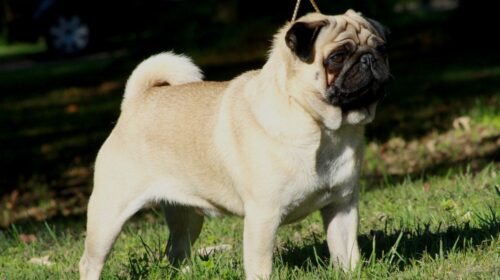
The Pug Dog is a charming and beautiful dog. Officially named “pug” in the late 18th century, the word is derived from an old word meaning “ghost,” “lion’s nose,” or “little monkey.” The Pug is a thoughtful, lovable small breed of dog that requires little exercise and care, yet enjoys companionship. Its distinctive features include a wrinkled face and a Boxer-like gait. It communicates through snoring-like breathing and horse-like snorting sounds.
layer
Its fur is attractive, smooth, soft, short, and shiny, neither coarse nor woolly. The color may be silver, apricot, or black. The silver or apricot color should be distinct, contrasting sharply with the body markings and face color. Markings should be clearly visible. The muzzle or face color, ears, ear rims, thumbprints, diamond-shaped markings on the front legs, and back markings may be black. The face color should be black.
Colour:
Prefer a dog with a light brown, apricot, silvery, or black coat. The tail should ideally have a double layer of curly hair, curving upwards towards the upper part of the hocks.
Head
The head is large and heavy, not arched, but apple-shaped, with a sunken forehead. The eyes are deep, large, prominent, and very attractive. Round in shape, the gaze is calm and curious. Very bright, and full of passion when excited. The ears are thin, small, soft, and velvety black. There are two types of ears: rose-shaped ears or button-shaped ears. Button-shaped ears are preferred. The wrinkles are large and deep. The muzzle is short, blunt, and broad, but not upturned. The lower jaw should be slightly projected.
eyes
Very large, raised, round, shiny, dark in color (sometimes exhibiting a halo like blue glass tablets).
Ear
The ears should be thin, small, soft, and velvety black. There are two ear shapes: rose-shaped ears or button-shaped ears. Button-shaped ears are preferred.
nose
A black nose is preferred. The muzzle should not be pointed.
tail
The tail is carried high, curled tightly over the back; a double curled tail is preferred.
Chest
The body is short and stocky, with a broad chest and well-formed ribs.
Neck
The neck is slightly arched and strong, and of sufficient length to allow the head to be carried proudly.
front part
The forelegs are extremely strong, straight, of medium length, and set low on the body. When viewed from the side, the elbows are directly below the shoulders. The ankles are strong and balanced, neither too prominent nor too low. The feet are neither long like those of a rabbit nor too rounded like those of a cat. The toes are clearly separated and have black nails. Gills usually do not have nails.
The hindquarters are strong and powerful, with the knees bent at a moderate angle and the ankles straight. The legs are parallel when viewed from behind. The hindquarters are balanced with the front. The thighs and hips are well-formed and full. The feet are similar to the front legs.
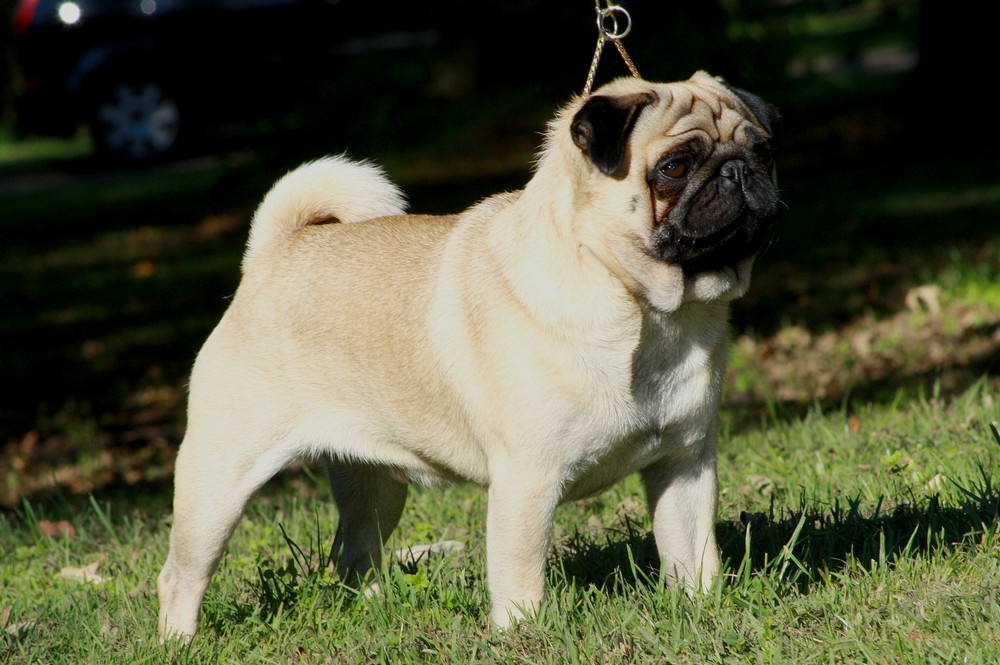
Introduction to the Pug Breed
The Pug breed, which originated in China and is also known domestically as the Haba Dog, is charming and elegant. Officially named “Pug” in the late 18th century, the name is derived from an archaic word meaning “ghost,” “lion’s nose,” or “little monkey.” With their sunken eyes and numerous facial wrinkles, as well as blocked tear ducts, Pug dogs are prone to entropion (inward-turned eyelids), often resulting in two distinct tear stains.
Evolution and Origin of the Pug
The Pug is a very historic breed. Experts believe its origins lie in Tibet, China. The breed’s origins date back to before Christ, when it was also known as the “mule dog” or “lucky dog” (this remains to be confirmed). Along with the Pekingese and Shih Tzu, it is one of the earliest flat-faced dog breeds domesticated in China. The modern name “pug” is a transliteration of the English word “pug,” which means “fist.” It is said that the name derives from the breed’s head shape resembling a clenched fist. What lineage does the Pug actually belong to? Some experts believe the breed originated in the Scottish Lowlands, later spreading to Asia, and then being brought west by Dutch traders from the Far East. Others believe it is an Eastern breed, descended from a short-haired variant of the Pekingese, which later crossed with the Bulldog. Some believe the Pug is a miniature version of the Bordeaux Mastiff, a French Mastiff breed, and it often appeared as a decorative element in artwork. Its popularity peaked during the Victorian era.
How much does a pug dog cost?
According to market research data compiled by the editors of Pet King, pet pug dogs typically cost between 35,000 and 140,000 rupees per dog. The price varies depending on the dog’s appearance and quality. Nowadays, most people raise pug dogs primarily as family companions. These pet pugs don’t have high requirements for appearance or breed. Pug dogs with acceptable appearance and quality, and a calm temperament, selling for around 35,000 rupees in the pet market, are suitable for purchase. Even in kennels, the price of pet dogs in this category remains between 35,000 and 140,000 rupees. It’s not advisable to purchase dogs that are too low in price, as they may develop various problems once brought home.
Pug Intelligence Profile
The Pug ranks 57th in the dog intelligence rankings, which are determined by evaluating factors such as the dog’s intelligence and obedience.
Research shows that a Pug’s intelligence is closely linked to genetic factors and breed characteristics, although postnatal training also has a significant impact. For Pug puppies, owners should use scientific training and management methods. This approach makes it easier to raise a well-behaved, obedient dog and highlights the importance of parenting.
Pug dogs have behaviors quite different from those of humans. To ensure a harmonious coexistence with family members, a training plan should begin soon after birth. After weaning, owners can instill basic training routines such as walking at heel, following designated toilet spots, and mealtimes. Daily training should also focus on preventing chewing or destroying furniture and household items.
Pugs are easily distracted and may need multiple training sessions to learn commands, so training requires extra patience and effort. Training should begin with establishing good habits. As the puppy grows and its bones and body fully develop, gradually move on to skill-based training. Effective training results in a calm, obedient dog that lives harmoniously with family members. Although Pugs are not as intelligent as a Border Collie or Golden Retriever, proper training allows them to adapt well to life with humans.
Characteristics of the Pug
Pugs are dogs with strong bodies and aggressive faces, but they possess a kind heart. They are intelligent, have a strong memory, express their emotions freely, and have a friendly nature. Their temperament is stable, gentle, lively, and playful. They love to play with children. They don’t require much exercise, making them well-suited for apartment living. Pugs are fairly easy to train, although professional trainers are often recommended. Pugs are very protective of their owners and bark loudly when strangers approach. The Pug is a considerate and lovable small dog breed that requires little exercise and care, but does require companionship. Its distinctive features include a wrinkled face and a Boxer-like gait. They communicate through a snarl-like sound and a distinctive growl. Additionally, this breed has a very clean nature, making it very popular.
Pug lifestyle and habits
Like humans, Pugs need plenty of exercise to maintain a strong body. The combination of exercise and moderate sun exposure not only keeps your Pug healthy and boosts its immune system, but also helps maintain a good physique. However, it’s important to note that Pugs differ from hunting dogs. Although they are active, their physical structure makes them unsuitable for prolonged, intense exercise. Therefore, please note:
- Pugs cannot tolerate heat. Pugs are extremely sensitive to heat. Avoid outdoor activities in hot weather, especially during the afternoons at the height of summer. Keep them in shady areas and provide plenty of water. Leaving a pug in a hot car for even half an hour, or subjecting them to strenuous outdoor exercise in extreme heat, can be fatal.
- Pugs’ flat noses can make breathing difficult. Therefore, monitor their exercise levels carefully. If you notice your pug panting heavily or showing any signs of difficulty breathing while playing or engaging in any activity, stop immediately. Pugs are extremely playful, especially puppies. Even if they are feeling unwell or uncomfortable, they will happily play until they collapse from exhaustion.
- Always carry sufficient amount of drinking water with you when going out.
- If your pug shows signs of heatstroke or overheating, wrap them in a damp towel and offer water. If they have difficulty breathing, spray a little lemon juice on their nose. This can reduce nasal mucus, helping them breathe more easily. If this doesn’t provide relief, contact your veterinarian immediately.
- A Pug under 18 months of age is still considered a puppy. For puppies, avoid not only excessive exercise but also vertical activities like jumping from heights or climbing stairs, as their bones are still developing. Such activities can easily damage their cartilage.
Advantages and Disadvantages of Pug Dogs
Advantages: Pug dogs are agile and playful, they especially love to play with children.
Grounds for Disqualification: Any deviation from the above points will be considered a fault, the severity of which will be proportionate to the degree of the fault and its impact on the dog’s health and welfare. Any dog with obvious physical or behavioral abnormalities will be disqualified.
Due to the Pug’s unique face and body, a daily grooming routine should include not only brushing its fur if possible, but also inspecting and caring for its eyes, nose, and facial skin. Starting regular checkups early is completely beneficial – not only does it help detect illnesses early and allow for timely treatment, but it also serves as basic early training, helping your Pug develop the good habit of calmly accepting daily checkups. Keep these daily checkups brief, no longer than 10 minutes.
Most dogs, especially puppies, become impatient when left unattended for long periods of time. Over time, this can lead to resistance to checkups. Our goal is to help them recognize regular checkups as a positive experience. Reward them after checkups, and if they cooperate well, praise them verbally or play their favorite game.
Skin problems or itching may occur. After each bath, brush the fur with a soft-bristled brush and dry it thoroughly with a hair dryer. During spring and autumn, when atmospheric pressure is low and humidity is high, the dog’s wrinkled skin is more prone to inflammation and fungus. During these times, keep the dog in a well-ventilated and dry environment. During the summer months, when sweating is more frequent, wipe its body daily with a wet towel in the afternoon, paying special attention to cleaning dirt from the skin folds.
Because of the Pug’s small, flat nose, it easily absorbs moisture, which can lead to bacterial growth and inflammation. During humid weather, apply dry boric acid powder to its nose to keep it dry and prevent bacterial growth. Due to its small nasal passages, Pugs may experience difficulty breathing or heatstroke during hot summer days. Therefore, the following precautions are necessary:
- Avoid taking them outside in the intense heat of the afternoon and avoid strenuous exercise. Schedule walks early in the morning or in the evening.
- Move them to a well-ventilated, shady area for feeding; never expose them to direct sunlight.
- During the hottest hours of the afternoon and evening, use a cooling device to appropriately lower the temperature of their environment, if available. During care, pay special attention to eye hygiene. Due to their large, round eyes, dust easily enters them. Therefore, at regular intervals, usually twice a week, clean their eyes with a mild boric acid solution. The folds over the eyes can cause eyelashes to grow inward, so carefully remove ingrown eyelashes if necessary. Pugs are gentle, calm, and emotionally sensitive. Their small stature and large, expressive eyes make them especially popular with senior citizens. However, their unique anatomy also presents some inherent challenges, requiring careful observation and care by their owners.
Pug Dog Frequently Asked Questions (FAQs)
Where did the pug originate?
Pugs, also known as Chinese Pugs or Harlequin Dogs, originated in China.
Do Pug Dogs Need a Lot of Exercise?
Pugs are small, sweet and attentive dogs that require little exercise and frequent grooming, but they do need companionship.
What is the intelligence ranking of the Pug dog?
The Pug is ranked 57th in the intelligence ranking of dogs.
Are pug dogs suitable for apartment living?
They don’t require much exercise, so they are very suitable for apartment living.
Are pugs protective of their owners?
Pugs are very protective of their owners and bark loudly when strangers approach.
How much heat can pugs tolerate?
Pugs are heat intolerant and are extremely sensitive to heat.
What should be kept in mind while exercising a pug?
Pugs’ flat noses can make it difficult for them to breathe, so monitor their exercise levels carefully.
Why can leaving a Pug in a hot car be dangerous?
Leaving a Pug in a hot car for even half an hour, or subjecting them to strenuous outdoor exercise in extreme heat, can be fatal.
Do pugs do well with children?
Their temperament is stable, gentle, lively and playful and they love to play with children.
What are the things to keep in mind while taking care of a pug?
Because of the Pug’s unique face and body, a daily grooming routine should include not only brushing his fur, but also inspecting and caring for his eyes, nose, and facial skin.